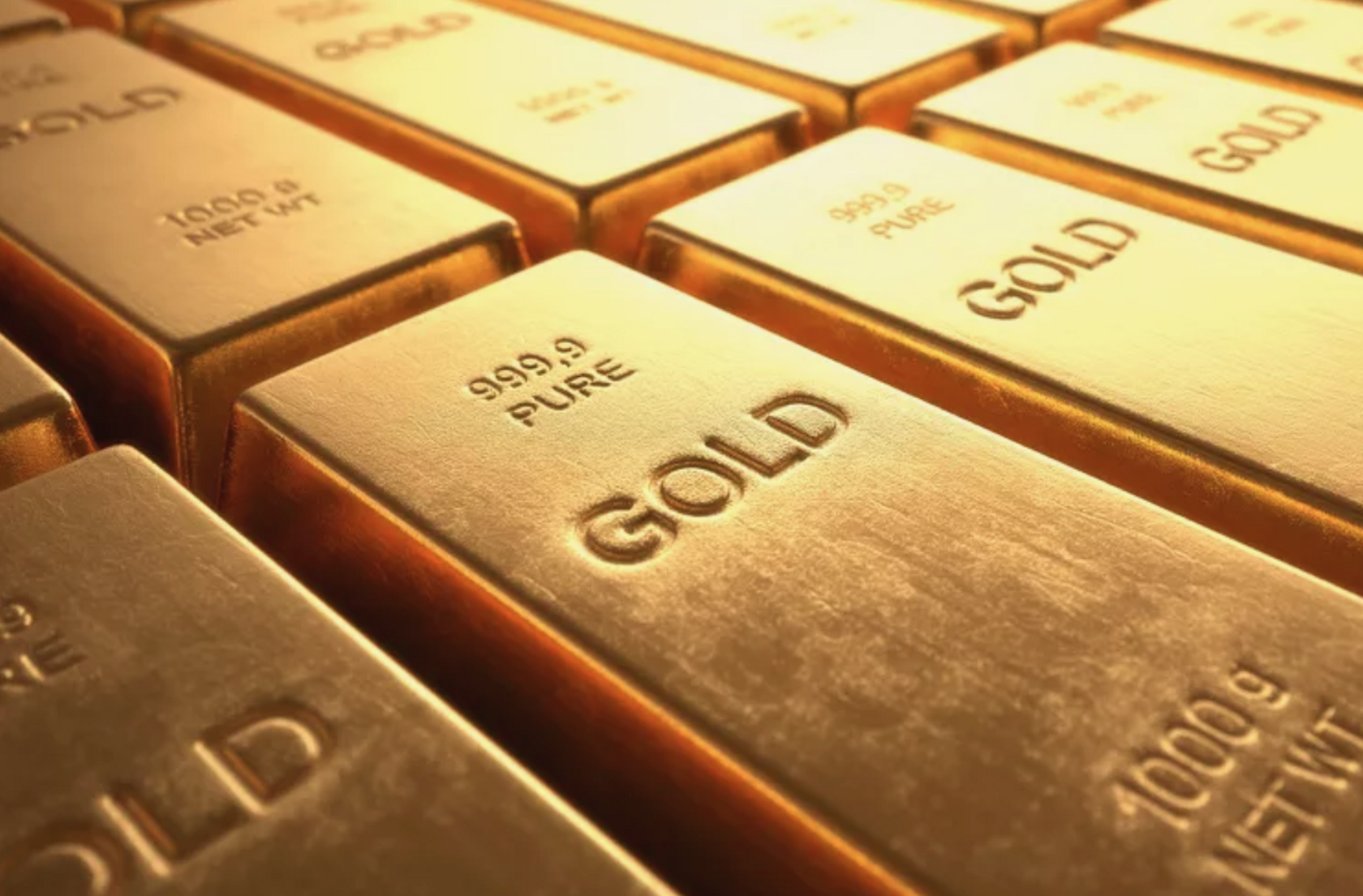
Gold futures crossed $4,000 per troy ounce for the first time on October 7, 2025, as investors shifted funds into safe-haven assets amid the ongoing U.S. government shutdown. Silver followed with a sharper percentage gain, reflecting broader market unease. These moves highlight how economic disruptions can drive commodity demand.
Gold's ascent this year has been steep, with futures up approximately 50% since January. Trading at $4,003 per troy ounce shortly after 4 p.m. ET on Tuesday, the metal started the year around $2,670. This trajectory aligns with historical patterns where gold serves as a store of value during periods of fiscal and policy uncertainty.
Silver has outperformed on a relative basis, climbing nearly 60% year-to-date to just under $48 per troy ounce in afternoon trading. Both metals' gains underscore their role in portfolios seeking protection from volatility, though the scale of the rally—driven by layered pressures—warrants scrutiny for allocation decisions.
The core driver behind these price increases is elevated uncertainty across multiple fronts. Investor interest in precious metals typically intensifies when confidence in equities, bonds, or fiat currencies wanes. In 2025, this has materialized through a combination of trade policies and domestic gridlock.
President Trump's escalated tariffs, implemented since January, have imposed steep duties on imports from key trading partners, including China, the European Union, and Mexico. These measures have raised input costs for U.S. manufacturers and retailers, contributing to a slowdown in business investment. Data from the Bureau of Labor Statistics shows nonfarm payroll growth averaging just 120,000 jobs per month through September, down from 220,000 in late 2024. Consumer spending, which drives two-thirds of GDP, has softened as households face higher prices for everyday goods like electronics and apparel.
Inflation metrics reflect this strain. The Consumer Price Index rose 0.3% in August, pushing the year-over-year rate to 3.2%, above the Federal Reserve's 2% target. Supply chain pressures, exacerbated by tariffs, led to unexpected deflation in producer prices (-0.1% in August), but core measures remain sticky. Job openings held steady at 7.2 million in August, per the Job Openings and Labor Turnover Survey, signaling a cooling labor market without outright contraction.
Layered on top is the U.S. government shutdown, now in its third week with no resolution in sight. Triggered by partisan disputes over spending bills, the impasse has furloughed over 800,000 federal workers and delayed critical data releases, including September's employment report. This opacity hampers corporate planning and investor forecasting. President Trump has publicly floated using the shutdown for administrative reforms, including potential mass terminations and office closures, aimed at curbing what he calls "wasteful bureaucracy." Such rhetoric amplifies fears of prolonged disruption, echoing the 2018-2019 shutdown's estimated $11 billion economic hit.
Currency dynamics add further fuel. The U.S. dollar index has weakened 8% year-to-date against a basket of major currencies, making dollar-denominated assets like gold more attractive to international buyers. The Federal Reserve's September meeting included a 25-basis-point cut to the federal funds rate, bringing it to 4.75-5.00%, with projections for two additional cuts by year-end. Lower rates reduce the opportunity cost of holding non-yielding assets like gold, encouraging inflows.
Global factors persist as well. Central banks, particularly in emerging markets, have ramped up gold reserves amid de-dollarization efforts. Purchases totaled 1,037 tonnes in 2024, per World Gold Council data, with 2025 on pace for similar volumes. Geopolitical flashpoints, including the protracted conflicts in Ukraine and Gaza, sustain demand for neutral stores of value. The 2022 freezing of $300 billion in Russian central bank assets by Western nations marked a pivotal shift, eroding trust in reserve currencies and accelerating gold's role as an alternative.
📝 “The gold rally started in 2022,” said Giovanni Staunovo, commodity analyst at UBS Global Wealth Management, in an email on Tuesday. 📝 “He noted that the ‘trigger point’ was when the U.S. and other Western allies moved to freeze around $300 billion of Russian foreign holdings at the beginning of the war in Ukraine.”
Staunovo also highlighted the dollar's slide and Fed easing as near-term catalysts. Exchange-traded funds tracking gold saw $2.1 billion in inflows during September alone, per ETFGI data, pushing total assets under management to record levels.
These trends ripple into consumer markets, particularly jewelry. Retailers report a dual dynamic: increased sell-offs of existing holdings and hesitation among buyers facing elevated prices. Independent dealers note a 30-40% uptick in appraisals for heirlooms, with some owners opting to liquidate via melting rather than hold. This behavior aligns with gold's spot price premium over fabrication costs, currently around 5-7% for bullion.
For purchasers, the equation has shifted. Jewelry accounts for about 50% of global gold demand, per the World Gold Council, but tariff-induced cost hikes compound material expenses. Pandora, the Danish accessories giant, flagged these pressures in its August earnings. 📝 “If I’m a guessing man here, we will see a general price rise for the category,” said CEO Alexander Lacik during the call, attributing it to rising gold and silver costs alongside tariffs. 📝 Signet Jewelers, parent to Zales and Kay, echoed this in its Q2 report, citing a 15% year-over-year increase in average unit costs.
U.S. jewelry sales volume dipped 2% in the first half of 2025, per National Retail Federation estimates, though dollar value rose due to pricing. Consumers in higher brackets may absorb the hit, but middle-market segments face trade-offs, potentially redirecting spend to alternatives like lab-grown diamonds or stainless steel pieces.
Assessing gold as an investment requires weighing its merits against risks. Proponents view it as a diversifier, with low correlation to stocks (historically around 0.1 over 20-year periods) and bonds. In inflationary environments, gold's real return has averaged 4-6% annually since 1971, outpacing cash equivalents. Physical forms offer tangibility, with storage costs minimal at 0.5-1% per year for allocated vaults.
However, diversification remains key. Allocating 5-10% of a portfolio to gold can reduce overall volatility by 1-2 percentage points, based on Vanguard's asset allocation models, but over-reliance exposes investors to commodity-specific swings. Gold's annualized volatility hovers at 10-15%, comparable to emerging market equities but higher than Treasuries.
Critics point to opportunity costs and inconsistent hedging. During the 2010s bull market for stocks, gold underperformed the S&P 500 by 300 basis points annually. The Commodity Futures Trading Commission (CFTC) advises caution, noting that price surges often benefit sellers most during peak anxiety. 📝 “Precious metals can be highly volatile, the commission said, and prices rise as demand goes up — meaning ‘when economic anxiety or instability is high, the people who typically profit from precious metals are the sellers.’” 📝
Counterfeit risks loom in physical markets, with the CFTC reporting a 20% rise in fraud complaints in 2024. Investors should verify via accredited assayers like the Professional Coin Grading Service and avoid unsolicited deals. For efficiency, ETFs like SPDR Gold Shares (GLD) trade at narrow spreads (0.4% expense ratio) and eliminate storage hassles, though they forgo physical ownership.
Silver presents a higher-beta play, with industrial demand (50% of usage in solar panels and electronics) amplifying its sensitivity to growth cycles. At current levels, its gold-to-silver ratio stands at 83:1, near historical averages, suggesting no extreme undervaluation.
In summary, the breach of $4,000 signals entrenched caution, but sustainable positioning demands monitoring Fed paths, tariff resolutions, and global reserves. Investors should model scenarios: a swift shutdown end could retrace 5-10% of gains, while prolongation might test $4,200. Balance exposure with broader assets for resilience.
Gold's ascent this year has been steep, with futures up approximately 50% since January. Trading at $4,003 per troy ounce shortly after 4 p.m. ET on Tuesday, the metal started the year around $2,670. This trajectory aligns with historical patterns where gold serves as a store of value during periods of fiscal and policy uncertainty.
Silver has outperformed on a relative basis, climbing nearly 60% year-to-date to just under $48 per troy ounce in afternoon trading. Both metals' gains underscore their role in portfolios seeking protection from volatility, though the scale of the rally—driven by layered pressures—warrants scrutiny for allocation decisions.
The core driver behind these price increases is elevated uncertainty across multiple fronts. Investor interest in precious metals typically intensifies when confidence in equities, bonds, or fiat currencies wanes. In 2025, this has materialized through a combination of trade policies and domestic gridlock.
President Trump's escalated tariffs, implemented since January, have imposed steep duties on imports from key trading partners, including China, the European Union, and Mexico. These measures have raised input costs for U.S. manufacturers and retailers, contributing to a slowdown in business investment. Data from the Bureau of Labor Statistics shows nonfarm payroll growth averaging just 120,000 jobs per month through September, down from 220,000 in late 2024. Consumer spending, which drives two-thirds of GDP, has softened as households face higher prices for everyday goods like electronics and apparel.
Inflation metrics reflect this strain. The Consumer Price Index rose 0.3% in August, pushing the year-over-year rate to 3.2%, above the Federal Reserve's 2% target. Supply chain pressures, exacerbated by tariffs, led to unexpected deflation in producer prices (-0.1% in August), but core measures remain sticky. Job openings held steady at 7.2 million in August, per the Job Openings and Labor Turnover Survey, signaling a cooling labor market without outright contraction.
Layered on top is the U.S. government shutdown, now in its third week with no resolution in sight. Triggered by partisan disputes over spending bills, the impasse has furloughed over 800,000 federal workers and delayed critical data releases, including September's employment report. This opacity hampers corporate planning and investor forecasting. President Trump has publicly floated using the shutdown for administrative reforms, including potential mass terminations and office closures, aimed at curbing what he calls "wasteful bureaucracy." Such rhetoric amplifies fears of prolonged disruption, echoing the 2018-2019 shutdown's estimated $11 billion economic hit.
Currency dynamics add further fuel. The U.S. dollar index has weakened 8% year-to-date against a basket of major currencies, making dollar-denominated assets like gold more attractive to international buyers. The Federal Reserve's September meeting included a 25-basis-point cut to the federal funds rate, bringing it to 4.75-5.00%, with projections for two additional cuts by year-end. Lower rates reduce the opportunity cost of holding non-yielding assets like gold, encouraging inflows.
Global factors persist as well. Central banks, particularly in emerging markets, have ramped up gold reserves amid de-dollarization efforts. Purchases totaled 1,037 tonnes in 2024, per World Gold Council data, with 2025 on pace for similar volumes. Geopolitical flashpoints, including the protracted conflicts in Ukraine and Gaza, sustain demand for neutral stores of value. The 2022 freezing of $300 billion in Russian central bank assets by Western nations marked a pivotal shift, eroding trust in reserve currencies and accelerating gold's role as an alternative.
📝 “The gold rally started in 2022,” said Giovanni Staunovo, commodity analyst at UBS Global Wealth Management, in an email on Tuesday. 📝 “He noted that the ‘trigger point’ was when the U.S. and other Western allies moved to freeze around $300 billion of Russian foreign holdings at the beginning of the war in Ukraine.”
Staunovo also highlighted the dollar's slide and Fed easing as near-term catalysts. Exchange-traded funds tracking gold saw $2.1 billion in inflows during September alone, per ETFGI data, pushing total assets under management to record levels.
These trends ripple into consumer markets, particularly jewelry. Retailers report a dual dynamic: increased sell-offs of existing holdings and hesitation among buyers facing elevated prices. Independent dealers note a 30-40% uptick in appraisals for heirlooms, with some owners opting to liquidate via melting rather than hold. This behavior aligns with gold's spot price premium over fabrication costs, currently around 5-7% for bullion.
For purchasers, the equation has shifted. Jewelry accounts for about 50% of global gold demand, per the World Gold Council, but tariff-induced cost hikes compound material expenses. Pandora, the Danish accessories giant, flagged these pressures in its August earnings. 📝 “If I’m a guessing man here, we will see a general price rise for the category,” said CEO Alexander Lacik during the call, attributing it to rising gold and silver costs alongside tariffs. 📝 Signet Jewelers, parent to Zales and Kay, echoed this in its Q2 report, citing a 15% year-over-year increase in average unit costs.
U.S. jewelry sales volume dipped 2% in the first half of 2025, per National Retail Federation estimates, though dollar value rose due to pricing. Consumers in higher brackets may absorb the hit, but middle-market segments face trade-offs, potentially redirecting spend to alternatives like lab-grown diamonds or stainless steel pieces.
Assessing gold as an investment requires weighing its merits against risks. Proponents view it as a diversifier, with low correlation to stocks (historically around 0.1 over 20-year periods) and bonds. In inflationary environments, gold's real return has averaged 4-6% annually since 1971, outpacing cash equivalents. Physical forms offer tangibility, with storage costs minimal at 0.5-1% per year for allocated vaults.
However, diversification remains key. Allocating 5-10% of a portfolio to gold can reduce overall volatility by 1-2 percentage points, based on Vanguard's asset allocation models, but over-reliance exposes investors to commodity-specific swings. Gold's annualized volatility hovers at 10-15%, comparable to emerging market equities but higher than Treasuries.
Critics point to opportunity costs and inconsistent hedging. During the 2010s bull market for stocks, gold underperformed the S&P 500 by 300 basis points annually. The Commodity Futures Trading Commission (CFTC) advises caution, noting that price surges often benefit sellers most during peak anxiety. 📝 “Precious metals can be highly volatile, the commission said, and prices rise as demand goes up — meaning ‘when economic anxiety or instability is high, the people who typically profit from precious metals are the sellers.’” 📝
Counterfeit risks loom in physical markets, with the CFTC reporting a 20% rise in fraud complaints in 2024. Investors should verify via accredited assayers like the Professional Coin Grading Service and avoid unsolicited deals. For efficiency, ETFs like SPDR Gold Shares (GLD) trade at narrow spreads (0.4% expense ratio) and eliminate storage hassles, though they forgo physical ownership.
Silver presents a higher-beta play, with industrial demand (50% of usage in solar panels and electronics) amplifying its sensitivity to growth cycles. At current levels, its gold-to-silver ratio stands at 83:1, near historical averages, suggesting no extreme undervaluation.
In summary, the breach of $4,000 signals entrenched caution, but sustainable positioning demands monitoring Fed paths, tariff resolutions, and global reserves. Investors should model scenarios: a swift shutdown end could retrace 5-10% of gains, while prolongation might test $4,200. Balance exposure with broader assets for resilience.