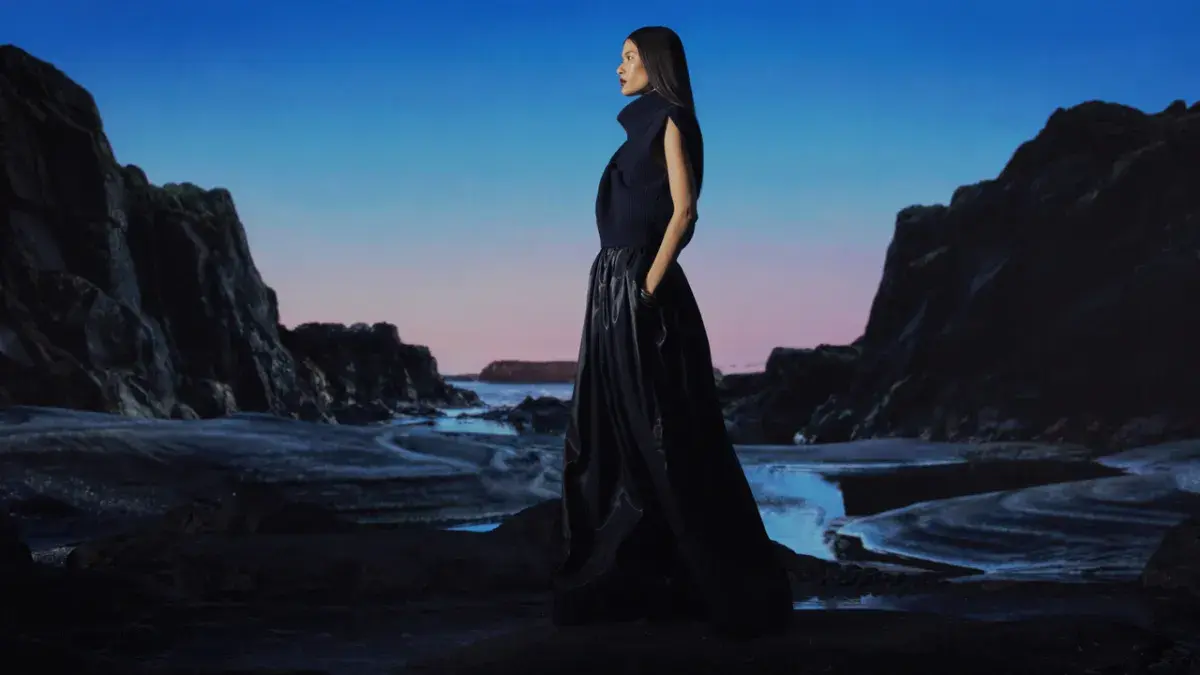
On Saturday, February 14, 2026, designer Kate Barton unveiled her Fall/Winter 2026 collection at New York Fashion Week in a presentation that blurred the boundaries between fashion and technology. In collaboration with Fiducia AI and IBM, Barton created a multilingual AI agent built with IBM watsonx on IBM Cloud to help guests identify pieces from the collection and try them on virtually.
This isn't simply technology for its own sake. Barton views the AI integration as set design that creates a portal into the collection's world TechCrunch, rather than a gimmick. The designer, who has been on a meteoric rise since launching her brand just three years ago, sees technology as integral to how she thinks about fashion and storytelling.
A Designer on the Rise
Kate Barton's journey to New York Fashion Week has been unconventional. The Kansas City native never initially intended to launch a fashion brand. She entered a design contest in Milan while in graduate school, became the first American to win, and suddenly found herself with mentorship and support to build a label. Three years later, she's a CFDA/Vogue Fashion Fund finalist with her designs carried by Nordstrom and Bloomingdale's.
Her signature aesthetic combines sculptural draping with futuristic elements - think proprietary draping techniques that create sculptural drama with minimal waste WWD. She's perhaps best known for her viral goldfish handbag, which became so popular after Heidi Klum wore it in 2023 that it led to an actual collaboration with Goldfish crackers and now comes as a Bandolier phone case.
The AI Integration: Enhancement, Not Replacement
What sets Barton's Fall 2026 presentation apart is her thoughtful approach to artificial intelligence. While many designers are experimenting with AI quietly, wary of potential backlash, Barton has made it a public centerpiece. However, she's clear about her intentions: the technology should expand the world around the clothes and how people enter the story TechCrunch, not replace the human element.
"If the technology is used to erase people, I am not into it," she emphasized in a pre-show interview. Her vision centers on using AI for better prototyping, visualization, and immersive experiences while keeping human creativity at the core. The visual AI system allows attendees to interact with the collection in multiple languages through voice and text, and offers photorealistic virtual try-ons.
The Collection Itself
While the technological elements grabbed headlines, the clothing remains Barton's true focus. The Fall/Winter 2026 collection continues her evolution from purely sculptural, futuristic pieces toward more accessible, wearable designs. Building on her Spring 2026 collection's move into casual daywear, this season represents what Barton calls an expansion of her brand's DNA in fresh, accessible ways.
The Fall/Winter collection blends architectural precision with ethereal fluidity, featuring sleek metallic finishes in silver, platinum, and gunmetal alongside asymmetrical cuts and strategic pleating OTSMAGAZINE. Innovative tailoring takes center stage with sharply contoured blazers, fluid column gowns, and deconstructed corsetry. Materials include bonded silk, high-tech lamé, and sheer paneling that create contrasts between strength and delicacy.
The Broader Conversation
Barton's presentation arrives at a moment when the fashion industry is grappling with how to integrate artificial intelligence. She sees parallels to the early days of e-commerce, when major fashion houses were nervous about launching websites. "Then it became inevitable," she noted, "and eventually the question shifted from 'should we be online' to 'is our online presence any good?'"
Her collaborator, Fiducia AI CEO Ganesh Harinath, predicts AI in fashion will be normalized by 2028 and fully embedded into retail operations by 2030. But Barton insists that the most exciting future for fashion isn't automated fashion - it's fashion that uses new tools to heighten craft, deepen storytelling, and bring more people into the experience.
Her philosophy is clear: technology should require "clear discourse, clear licensing, clear credit, and a shared understanding that human creativity is not an annoying overhead cost." In an industry often criticized for exploiting labor and creativity, this stance positions Barton as not just a technical innovator, but an ethical one.
What's Next
The Fall 2026 show represents a pivotal moment for both Barton and the broader fashion industry. With plans for category expansion, new retail partnerships, and upcoming red carpet appearances lined up, Barton is positioned to bring her fusion of futuristic design and accessible luxury to a wider audience.
This isn't simply technology for its own sake. Barton views the AI integration as set design that creates a portal into the collection's world TechCrunch, rather than a gimmick. The designer, who has been on a meteoric rise since launching her brand just three years ago, sees technology as integral to how she thinks about fashion and storytelling.
A Designer on the Rise
Kate Barton's journey to New York Fashion Week has been unconventional. The Kansas City native never initially intended to launch a fashion brand. She entered a design contest in Milan while in graduate school, became the first American to win, and suddenly found herself with mentorship and support to build a label. Three years later, she's a CFDA/Vogue Fashion Fund finalist with her designs carried by Nordstrom and Bloomingdale's.
Her signature aesthetic combines sculptural draping with futuristic elements - think proprietary draping techniques that create sculptural drama with minimal waste WWD. She's perhaps best known for her viral goldfish handbag, which became so popular after Heidi Klum wore it in 2023 that it led to an actual collaboration with Goldfish crackers and now comes as a Bandolier phone case.
The AI Integration: Enhancement, Not Replacement
What sets Barton's Fall 2026 presentation apart is her thoughtful approach to artificial intelligence. While many designers are experimenting with AI quietly, wary of potential backlash, Barton has made it a public centerpiece. However, she's clear about her intentions: the technology should expand the world around the clothes and how people enter the story TechCrunch, not replace the human element.
"If the technology is used to erase people, I am not into it," she emphasized in a pre-show interview. Her vision centers on using AI for better prototyping, visualization, and immersive experiences while keeping human creativity at the core. The visual AI system allows attendees to interact with the collection in multiple languages through voice and text, and offers photorealistic virtual try-ons.
The Collection Itself
While the technological elements grabbed headlines, the clothing remains Barton's true focus. The Fall/Winter 2026 collection continues her evolution from purely sculptural, futuristic pieces toward more accessible, wearable designs. Building on her Spring 2026 collection's move into casual daywear, this season represents what Barton calls an expansion of her brand's DNA in fresh, accessible ways.
The Fall/Winter collection blends architectural precision with ethereal fluidity, featuring sleek metallic finishes in silver, platinum, and gunmetal alongside asymmetrical cuts and strategic pleating OTSMAGAZINE. Innovative tailoring takes center stage with sharply contoured blazers, fluid column gowns, and deconstructed corsetry. Materials include bonded silk, high-tech lamé, and sheer paneling that create contrasts between strength and delicacy.
The Broader Conversation
Barton's presentation arrives at a moment when the fashion industry is grappling with how to integrate artificial intelligence. She sees parallels to the early days of e-commerce, when major fashion houses were nervous about launching websites. "Then it became inevitable," she noted, "and eventually the question shifted from 'should we be online' to 'is our online presence any good?'"
Her collaborator, Fiducia AI CEO Ganesh Harinath, predicts AI in fashion will be normalized by 2028 and fully embedded into retail operations by 2030. But Barton insists that the most exciting future for fashion isn't automated fashion - it's fashion that uses new tools to heighten craft, deepen storytelling, and bring more people into the experience.
Her philosophy is clear: technology should require "clear discourse, clear licensing, clear credit, and a shared understanding that human creativity is not an annoying overhead cost." In an industry often criticized for exploiting labor and creativity, this stance positions Barton as not just a technical innovator, but an ethical one.
What's Next
The Fall 2026 show represents a pivotal moment for both Barton and the broader fashion industry. With plans for category expansion, new retail partnerships, and upcoming red carpet appearances lined up, Barton is positioned to bring her fusion of futuristic design and accessible luxury to a wider audience.