Apple Inc. is accelerating development of new wearable devices as it shifts hardware strategy toward artificial intelligence integration. The effort places the company in direct competition with OpenAI and Meta Platforms Inc. in the emerging category of AI-powered peripherals.
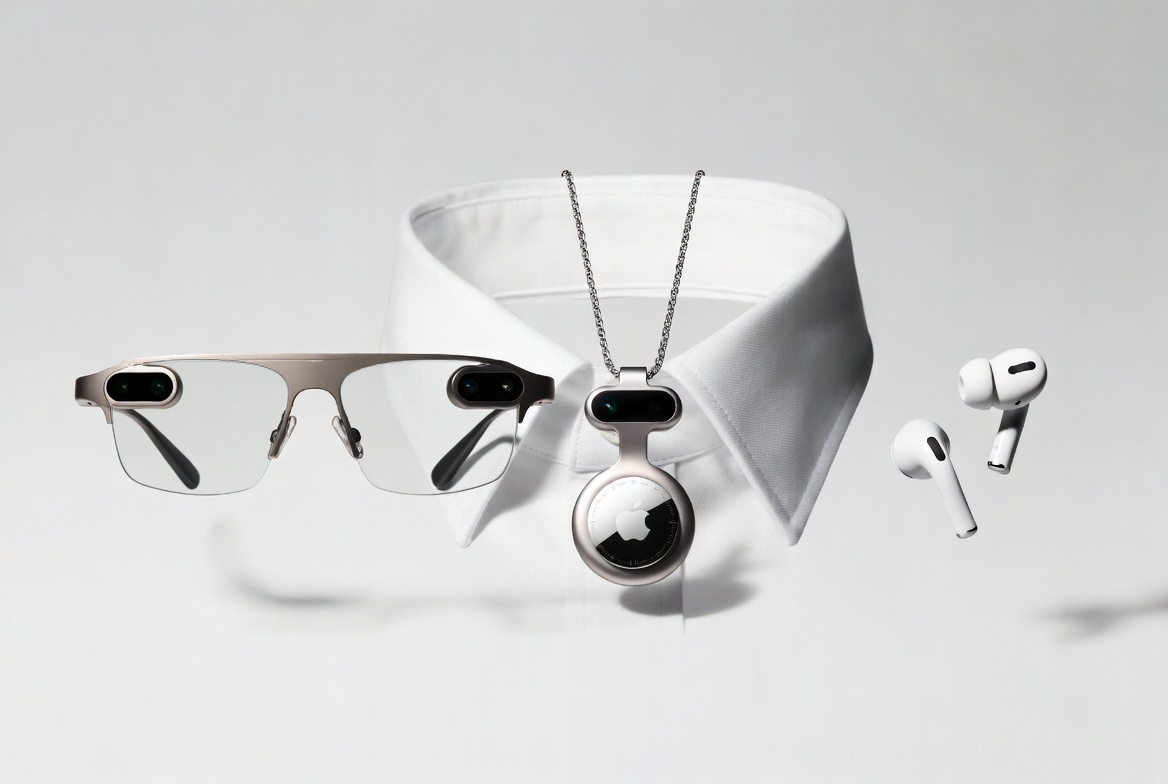
The devices — smart glasses and a clip-on or necklace pendan with camera and expanded AI functions — are all centered on an upgraded Siri digital assistant that processes visual context to execute commands. Each product connects to the iPhone and incorporates a camera system calibrated to its intended use, according to individuals familiar with the plans. Apple declined to comment.
Meta’s camera-equipped glasses have gained market traction. OpenAI is pursuing its own wearable lineup in collaboration with former Apple design head Jony Ive and other ex-Apple engineers. Apple’s prior attempt at a new category, the Vision Pro headset, achieved limited consumer adoption. The current wearable push aims to strengthen ecosystem lock-in through practical, daily-use devices.
Smart Glasses
The glasses are engineered as the flagship AI hardware item, set to compete directly with Meta’s offerings. They include a high-resolution camera for photo and video capture.
Development has advanced under the internal code name N50. Apple has distributed additional prototypes to its hardware engineering teams and is targeting production start as early as December, for a potential 2027 market release.
The design omits any display, mirroring Meta’s current approach. Interaction occurs through speakers, microphones, and cameras for calls, Siri access, music playback, photography, and context-based actions. Apple is differentiating on two fronts: frame construction quality and camera performance.
Initial prototypes used modified frames from existing brands, and the company once explored third-party partnerships, consistent with industry practice (Meta partners with EssilorLuxottica; Google with Warby Parker). Apple has since shifted to in-house frame development across multiple sizes and colors.
The glasses incorporate two camera lenses: one for high-resolution imaging and a second dedicated to computer-vision processing, similar to the system in Vision Pro. The secondary sensor supplies spatial awareness and distance measurement to improve environmental interpretation.
Target functionality is an all-day AI companion that identifies objects in real time and supports routine tasks. Examples include querying ingredients on a plate, scanning printed text to extract calendar events, or generating location-triggered reminders when the user views a specific shelf in a store. Navigation instructions can reference visible landmarks rather than generic directions.
Apple already offers limited visual AI on iPhones through its Visual Intelligence feature; the glasses would extend that capability continuously and hands-free.
Camera Pendant
The pendant concept originated within the glasses project before the final glasses design was locked. It functions as an iPhone accessory rather than a standalone unit, essentially providing always-on “eyes and ears” for the phone via camera and microphone input to Siri. The industrial design team leads strategy, with engineering support from the Vision Products Group that created the Vision Pro.
Users can attach the AirTag-sized device via a clothing clip or thread a necklace through an integrated hole. The project remains at an early stage and could still be canceled, as Apple has done with prior concepts, including camera-equipped Apple Watch prototypes that proved impractical due to sleeve obstruction and poor wrist angles. If launched, the pendant could arrive as early as 2027. Plans for all three products remain subject to change.
The accelerated timeline reflects Apple’s need to secure a defensible position in AI hardware before competitors further establish market share. Execution risk remains material: hardware schedules have slipped in the past, and consumer response to camera-based wearables is unproven at scale. For investors, the developments indicate capital allocation toward peripherals that could extend iPhone relevance and recurring revenue, provided technical and regulatory hurdles on continuous visual data collection are cleared.
The devices — smart glasses and a clip-on or necklace pendan with camera and expanded AI functions — are all centered on an upgraded Siri digital assistant that processes visual context to execute commands. Each product connects to the iPhone and incorporates a camera system calibrated to its intended use, according to individuals familiar with the plans. Apple declined to comment.
Meta’s camera-equipped glasses have gained market traction. OpenAI is pursuing its own wearable lineup in collaboration with former Apple design head Jony Ive and other ex-Apple engineers. Apple’s prior attempt at a new category, the Vision Pro headset, achieved limited consumer adoption. The current wearable push aims to strengthen ecosystem lock-in through practical, daily-use devices.
Smart Glasses
The glasses are engineered as the flagship AI hardware item, set to compete directly with Meta’s offerings. They include a high-resolution camera for photo and video capture.
Development has advanced under the internal code name N50. Apple has distributed additional prototypes to its hardware engineering teams and is targeting production start as early as December, for a potential 2027 market release.
The design omits any display, mirroring Meta’s current approach. Interaction occurs through speakers, microphones, and cameras for calls, Siri access, music playback, photography, and context-based actions. Apple is differentiating on two fronts: frame construction quality and camera performance.
Initial prototypes used modified frames from existing brands, and the company once explored third-party partnerships, consistent with industry practice (Meta partners with EssilorLuxottica; Google with Warby Parker). Apple has since shifted to in-house frame development across multiple sizes and colors.
The glasses incorporate two camera lenses: one for high-resolution imaging and a second dedicated to computer-vision processing, similar to the system in Vision Pro. The secondary sensor supplies spatial awareness and distance measurement to improve environmental interpretation.
Target functionality is an all-day AI companion that identifies objects in real time and supports routine tasks. Examples include querying ingredients on a plate, scanning printed text to extract calendar events, or generating location-triggered reminders when the user views a specific shelf in a store. Navigation instructions can reference visible landmarks rather than generic directions.
Apple already offers limited visual AI on iPhones through its Visual Intelligence feature; the glasses would extend that capability continuously and hands-free.
Camera Pendant
The pendant concept originated within the glasses project before the final glasses design was locked. It functions as an iPhone accessory rather than a standalone unit, essentially providing always-on “eyes and ears” for the phone via camera and microphone input to Siri. The industrial design team leads strategy, with engineering support from the Vision Products Group that created the Vision Pro.
Users can attach the AirTag-sized device via a clothing clip or thread a necklace through an integrated hole. The project remains at an early stage and could still be canceled, as Apple has done with prior concepts, including camera-equipped Apple Watch prototypes that proved impractical due to sleeve obstruction and poor wrist angles. If launched, the pendant could arrive as early as 2027. Plans for all three products remain subject to change.
The accelerated timeline reflects Apple’s need to secure a defensible position in AI hardware before competitors further establish market share. Execution risk remains material: hardware schedules have slipped in the past, and consumer response to camera-based wearables is unproven at scale. For investors, the developments indicate capital allocation toward peripherals that could extend iPhone relevance and recurring revenue, provided technical and regulatory hurdles on continuous visual data collection are cleared.