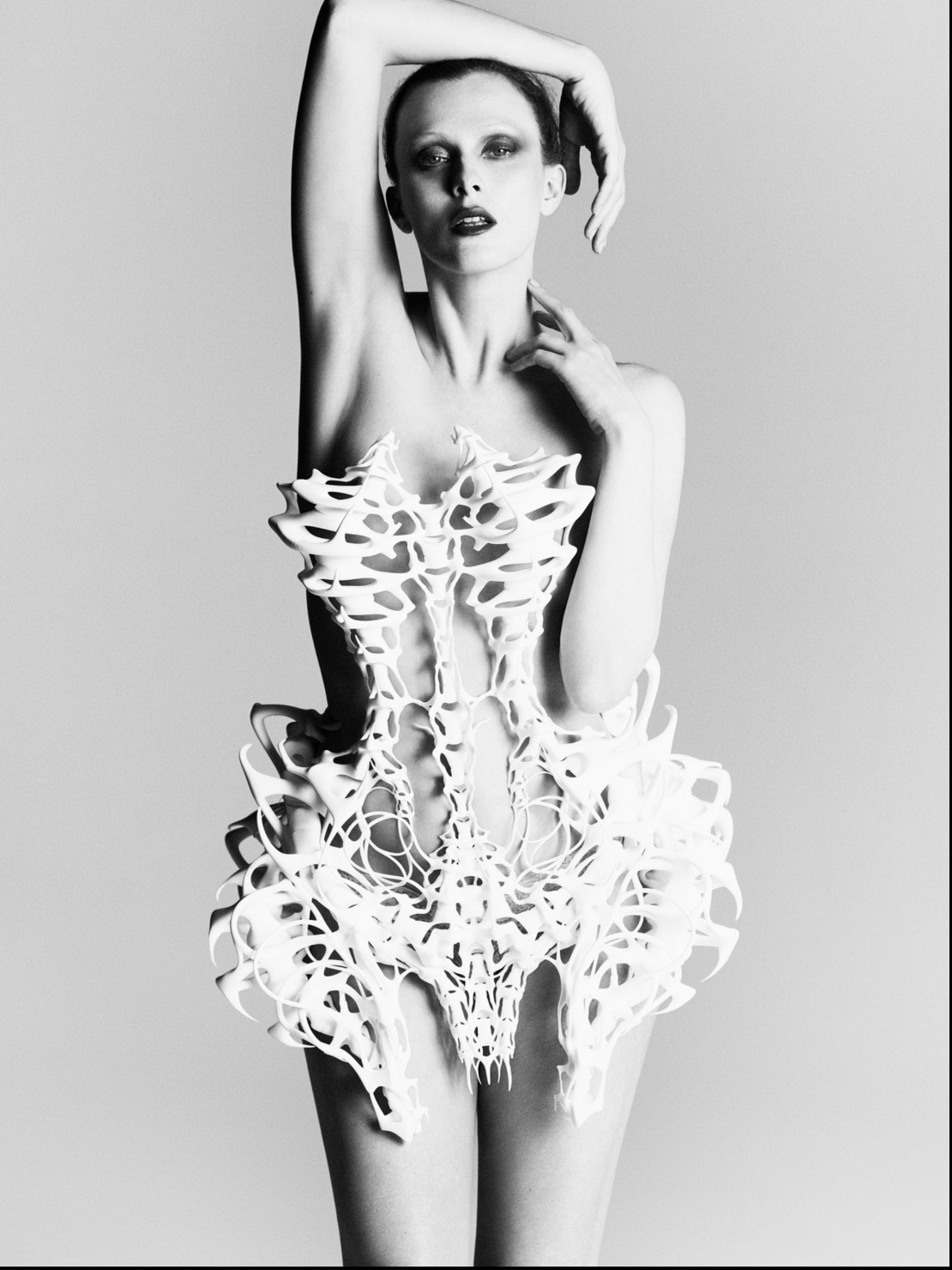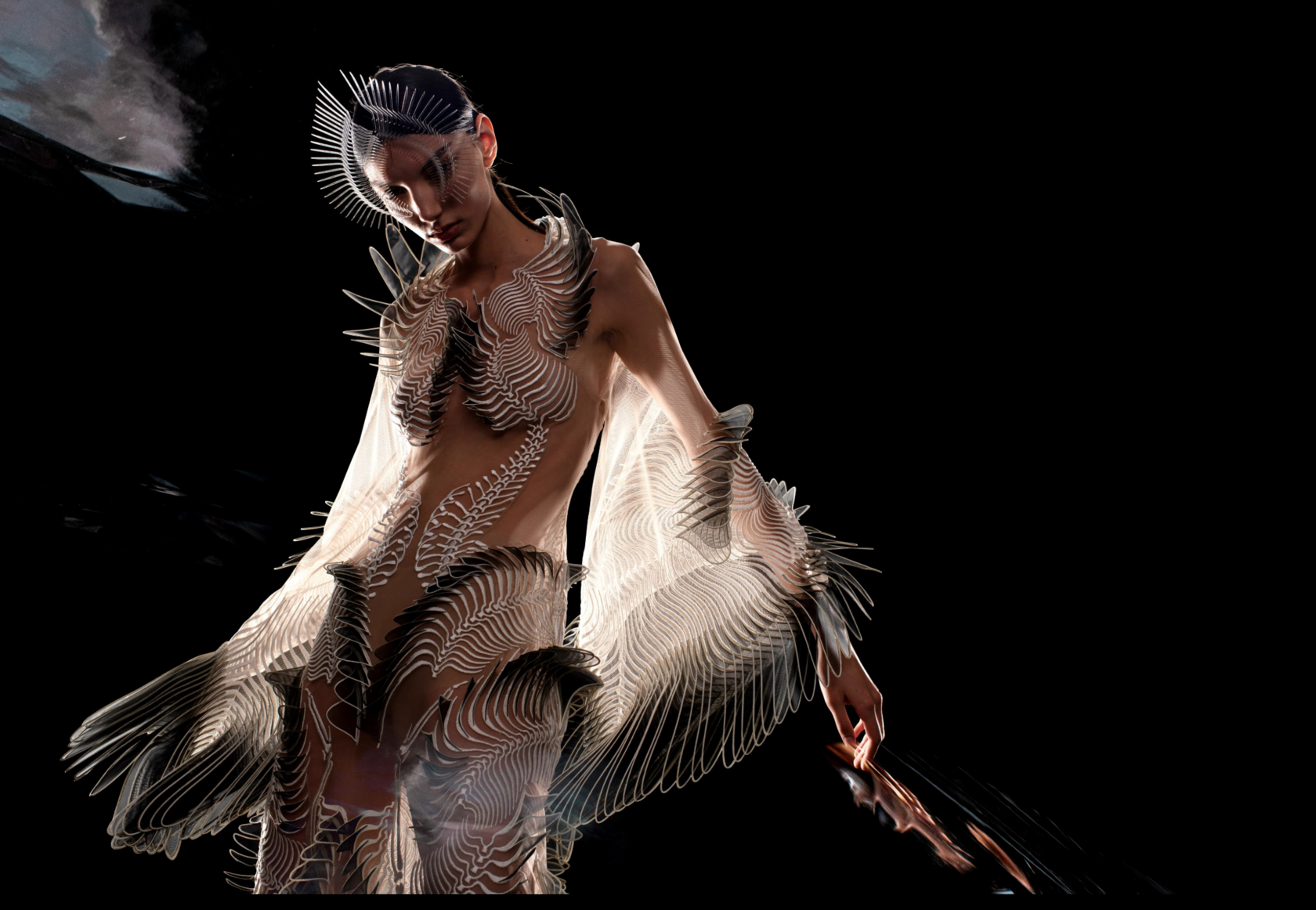
In 2010, Iris van Herpen sent the first 3D-printed garment down a runway. The fashion industry looked at a coiling ivory top built from polyamide and wondered what to make of it. Fifteen years later, the Brooklyn Museum is dedicating an entire retrospective to the answer.
"Sculpting the Senses" opens Saturday and runs through December 6. Organized around eleven themes — mathematics, astronomy, neuroscience, marine biology, paleontology, mycology — the exhibition is not about clothes. It is about what happens when a designer decides that the boundaries between fashion, science, architecture, and biology are entirely optional.
"Sculpting the Senses" opens Saturday and runs through December 6. Organized around eleven themes — mathematics, astronomy, neuroscience, marine biology, paleontology, mycology — the exhibition is not about clothes. It is about what happens when a designer decides that the boundaries between fashion, science, architecture, and biology are entirely optional.
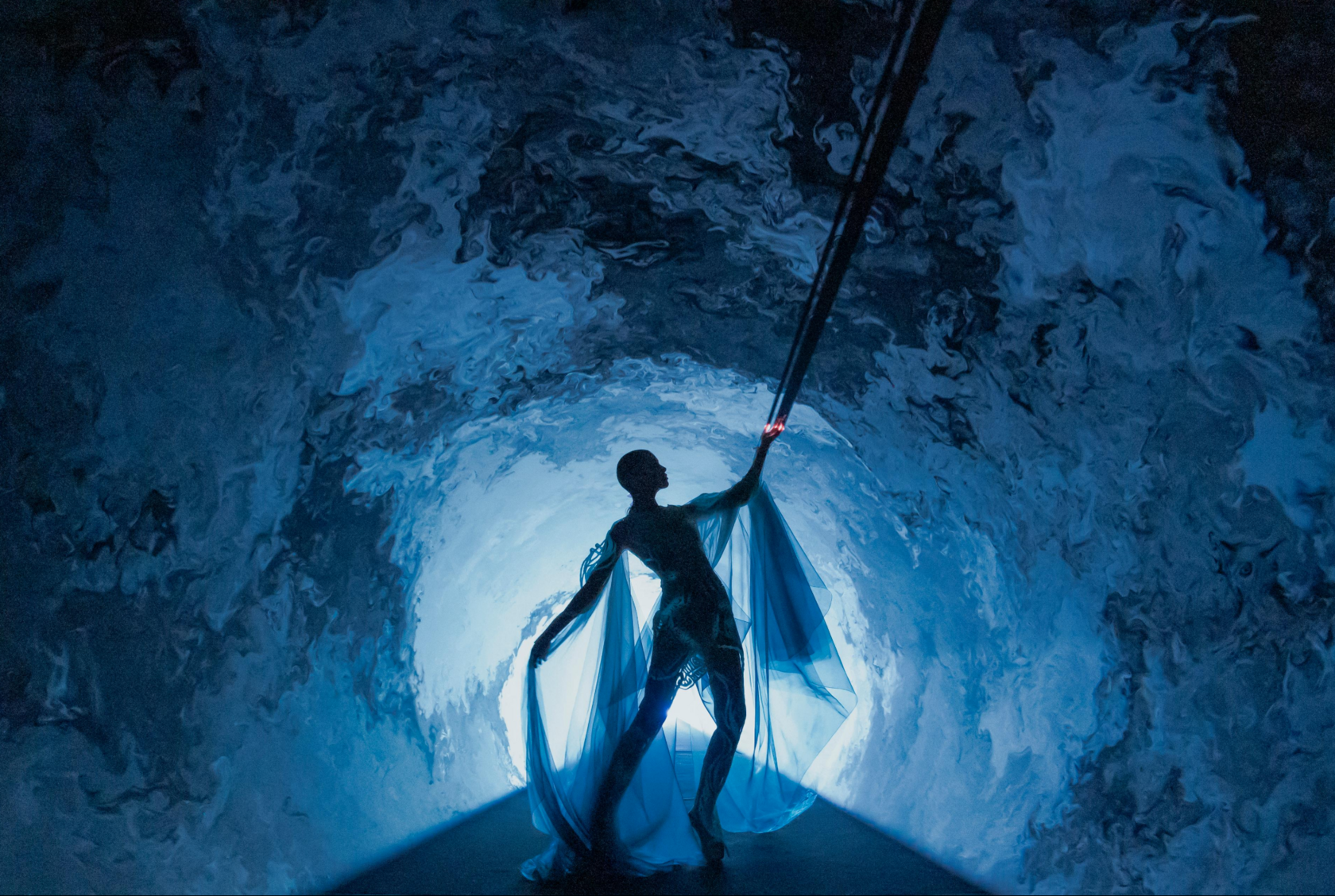
The pieces tell that story better than any description can. The algae dress from van Herpen's 2025 "Sympoiesis" collection — a collaboration with biodesigner Chris Bellamy and researchers at the University of Amsterdam — is constructed from 125 million living algae, grown in seawater baths over several months, emitting light in response to movement, displayed in an environmentally controlled chamber. The crimson plissé gown created for Anne Hathaway's character in "Mother Mary." The bubble dress from 2016's "Seijaku" — 15,000 hand-formed iridescent glass bubbles, each individually bonded with UV light, worn by Eileen Gu at this year's Met Gala in a custom version. Lady Gaga. Björk. Beyoncé's Renaissance tour Amsterdam costumes. All in one exhibition, flanked by Ernst Haeckel lithographs, Santiago Ramón y Cajal brain drawings, dinosaur fossils, and sea coral from the American Museum of Natural History.
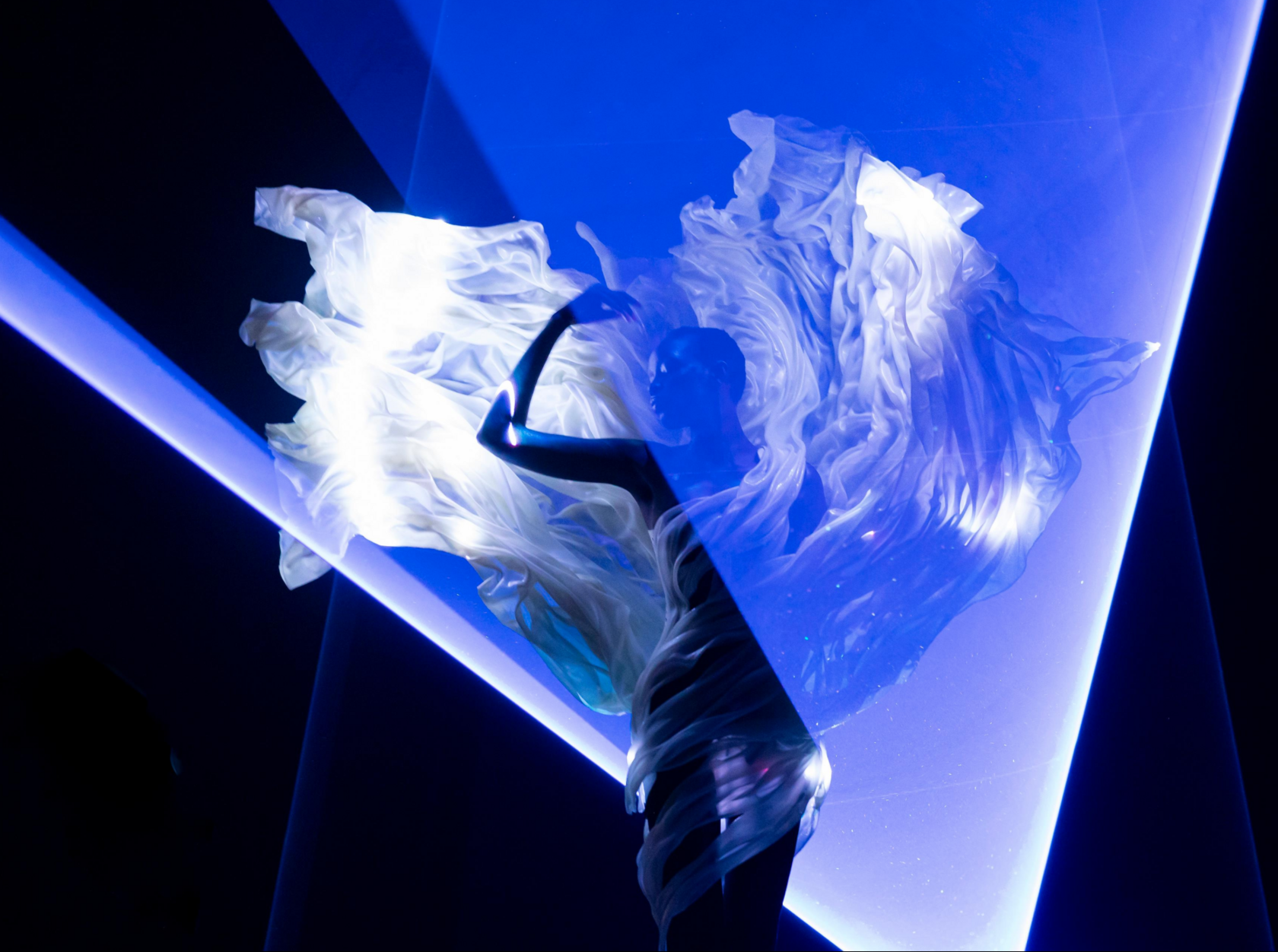
Van Herpen's own framing cuts to the thesis: "If you look at our atoms, they're 99.9 percent empty space. I'm fascinated by the atomic reality of our bodies; scientists give such an interesting perspective on who we are. I think art is doing the same thing."
The retrospective has already traveled from the Musée des Arts Décoratifs in Paris to Australia, Singapore, and Rotterdam. Brooklyn is its American debut.
For the Smart Fashion Council community: the future of fashion is not just about business models, market caps, and Bitcoin valuations. It is also about what designers like van Herpen are proving is physically possible when craft meets science. Living garments. Bio-based materials. 3D-printed architecture worn on the body. The infrastructure being built — Hyosung's $1 billion bio-spandex facility, Synflux's AI pattern cutting, Aura Blockchain's provenance layer — exists to support this kind of creative ambition at scale.
The garment made of living algae is the vision. The infrastructure is how it gets to every consumer.
The retrospective has already traveled from the Musée des Arts Décoratifs in Paris to Australia, Singapore, and Rotterdam. Brooklyn is its American debut.
For the Smart Fashion Council community: the future of fashion is not just about business models, market caps, and Bitcoin valuations. It is also about what designers like van Herpen are proving is physically possible when craft meets science. Living garments. Bio-based materials. 3D-printed architecture worn on the body. The infrastructure being built — Hyosung's $1 billion bio-spandex facility, Synflux's AI pattern cutting, Aura Blockchain's provenance layer — exists to support this kind of creative ambition at scale.
The garment made of living algae is the vision. The infrastructure is how it gets to every consumer.