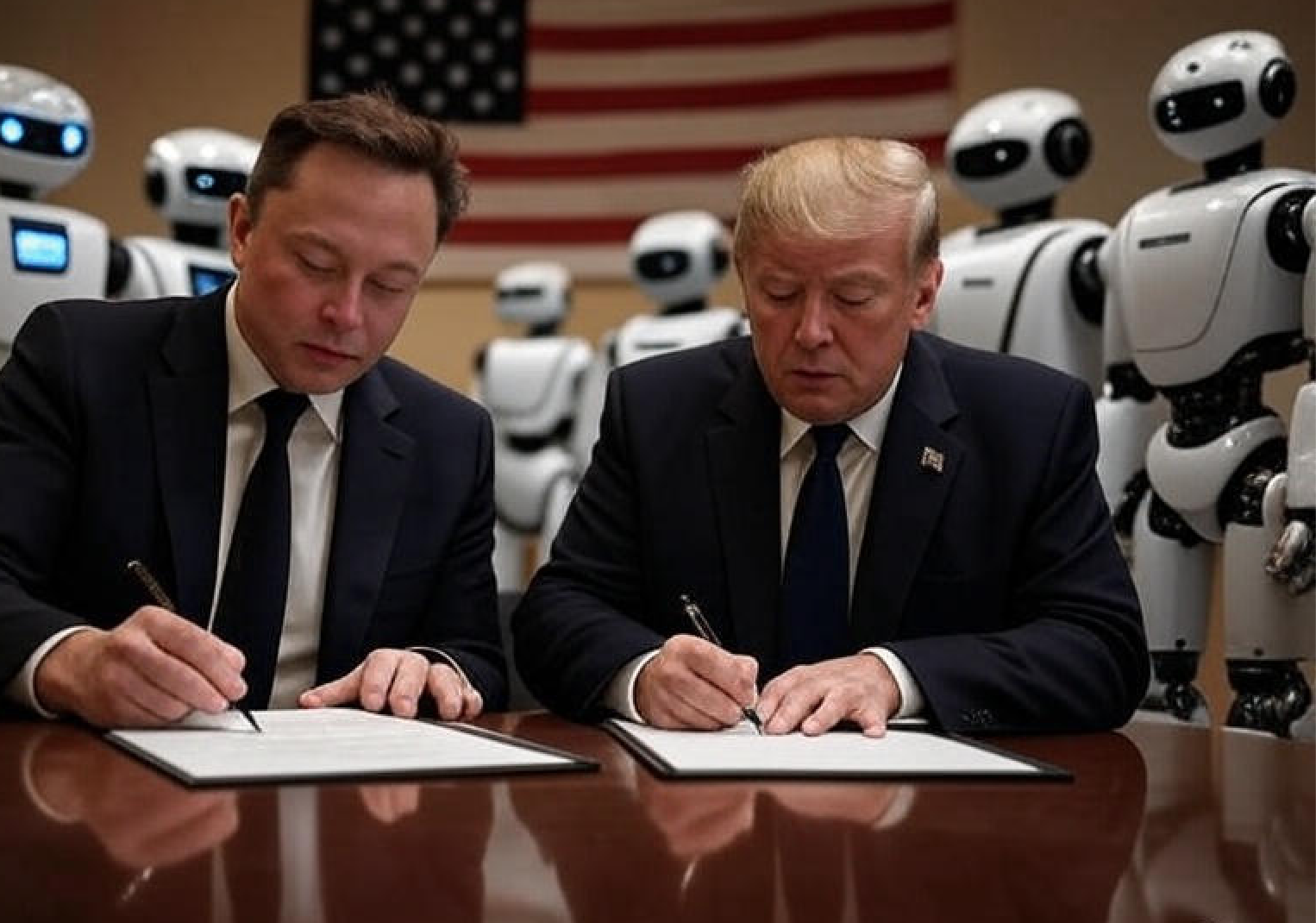
The General Services Administration announced a partnership with Elon Musk's xAI to provide federal agencies access to the Grok AI chatbot at a rate of $0.42 per organization, effective immediately through March 2027. This agreement undercuts pricing from competitors like OpenAI and aligns with the government's push to integrate AI tools across operations. Agencies gain not only discounted access but also dedicated xAI engineers for implementation support.
The deal marks xAI's entry into federal procurement channels, positioning Grok as a cost-effective option for tasks ranging from data analysis to administrative automation. As federal budgets face scrutiny, this low entry price could accelerate adoption without straining resources. For investors tracking AI deployment, the agreement highlights maturing government demand for scalable models.
Background on the Agreement
xAI, founded by Elon Musk in 2023, develops the Grok series of large language models designed for reasoning and real-time data integration. The company's latest frontier model, Grok-3, powers the chatbot available on platforms like x.com and mobile apps. This GSA partnership extends Grok's reach to over 100 federal agencies, enabling procurement through standardized terms.
Under the agreement, agencies pay $0.42 annually per organization for unlimited access to Grok models, including API calls and enterprise features. The term runs 18 months, from September 25, 2025, to March 31, 2027, providing long-term stability. GSA's Federal Acquisition Service facilitated the contract, emphasizing streamlined buying to avoid agency-specific negotiations.
This is not xAI's first government-facing move. Earlier in 2025, xAI collaborated on AI infrastructure projects under the Department of Energy, but this GSA deal focuses on end-user tools. For procurement officers, the flat fee simplifies budgeting, as it covers core functionalities without per-user add-ons.
The OneGov Strategy: Streamlining Federal AI Procurement
Launched in April 2025, GSA's OneGov Strategy centralizes IT acquisitions to eliminate redundancies and enforce uniform terms. Prior to OneGov, agencies negotiated individually, leading to inconsistent pricing and delayed rollouts. The initiative now covers 15 AI vendors, with a focus on frontier models capable of handling classified workloads.
OneGov's core pillars include:
By Q3 2025, OneGov facilitated $500 million in AI contracts, up 40% from the prior quarter. For federal IT leaders, this means faster deployment of tools for use cases like predictive analytics in the Department of Veterans Affairs or fraud detection at the IRS. The strategy also mandates annual audits to ensure value, protecting taxpayer funds.
Alignment with Trump's AI Action Plan
The xAI deal supports President Donald Trump's AI Action Plan, released in July 2025. The plan outlines three pillars: accelerating innovation, building infrastructure, and enhancing government deployment. It calls for $50 billion in federal AI investments by 2030, with mandates for agencies to integrate AI in 50% of operations by 2028.
Key directives include reducing regulatory barriers and prioritizing domestic providers to counter foreign competition, particularly from China. The plan warns against over-regulation, advocating for light-touch oversight to foster development. GSA's role is pivotal, as it procures 70% of federal IT, making OneGov a direct execution arm.
🚀 “Widespread access to advanced AI models is essential to building the efficient, accountable government that taxpayers deserve,” said Federal Acquisition Service Commissioner Josh Gruenbaum. “We value xAI for partnering with GSA—and dedicating engineers—to accelerate the adoption of Grok to transform government operations.”
This quote underscores the plan's emphasis on practical implementation over theoretical gains.
The deal marks xAI's entry into federal procurement channels, positioning Grok as a cost-effective option for tasks ranging from data analysis to administrative automation. As federal budgets face scrutiny, this low entry price could accelerate adoption without straining resources. For investors tracking AI deployment, the agreement highlights maturing government demand for scalable models.
Background on the Agreement
xAI, founded by Elon Musk in 2023, develops the Grok series of large language models designed for reasoning and real-time data integration. The company's latest frontier model, Grok-3, powers the chatbot available on platforms like x.com and mobile apps. This GSA partnership extends Grok's reach to over 100 federal agencies, enabling procurement through standardized terms.
Under the agreement, agencies pay $0.42 annually per organization for unlimited access to Grok models, including API calls and enterprise features. The term runs 18 months, from September 25, 2025, to March 31, 2027, providing long-term stability. GSA's Federal Acquisition Service facilitated the contract, emphasizing streamlined buying to avoid agency-specific negotiations.
This is not xAI's first government-facing move. Earlier in 2025, xAI collaborated on AI infrastructure projects under the Department of Energy, but this GSA deal focuses on end-user tools. For procurement officers, the flat fee simplifies budgeting, as it covers core functionalities without per-user add-ons.
The OneGov Strategy: Streamlining Federal AI Procurement
Launched in April 2025, GSA's OneGov Strategy centralizes IT acquisitions to eliminate redundancies and enforce uniform terms. Prior to OneGov, agencies negotiated individually, leading to inconsistent pricing and delayed rollouts. The initiative now covers 15 AI vendors, with a focus on frontier models capable of handling classified workloads.
OneGov's core pillars include:
- Standardized pricing to cap costs at commercial rates.
- Pre-vetted security compliance, prioritizing FedRAMP Moderate baselines.
- Volume commitments that unlock deeper discounts for high-usage agencies.
By Q3 2025, OneGov facilitated $500 million in AI contracts, up 40% from the prior quarter. For federal IT leaders, this means faster deployment of tools for use cases like predictive analytics in the Department of Veterans Affairs or fraud detection at the IRS. The strategy also mandates annual audits to ensure value, protecting taxpayer funds.
Alignment with Trump's AI Action Plan
The xAI deal supports President Donald Trump's AI Action Plan, released in July 2025. The plan outlines three pillars: accelerating innovation, building infrastructure, and enhancing government deployment. It calls for $50 billion in federal AI investments by 2030, with mandates for agencies to integrate AI in 50% of operations by 2028.
Key directives include reducing regulatory barriers and prioritizing domestic providers to counter foreign competition, particularly from China. The plan warns against over-regulation, advocating for light-touch oversight to foster development. GSA's role is pivotal, as it procures 70% of federal IT, making OneGov a direct execution arm.
🚀 “Widespread access to advanced AI models is essential to building the efficient, accountable government that taxpayers deserve,” said Federal Acquisition Service Commissioner Josh Gruenbaum. “We value xAI for partnering with GSA—and dedicating engineers—to accelerate the adoption of Grok to transform government operations.”
This quote underscores the plan's emphasis on practical implementation over theoretical gains.