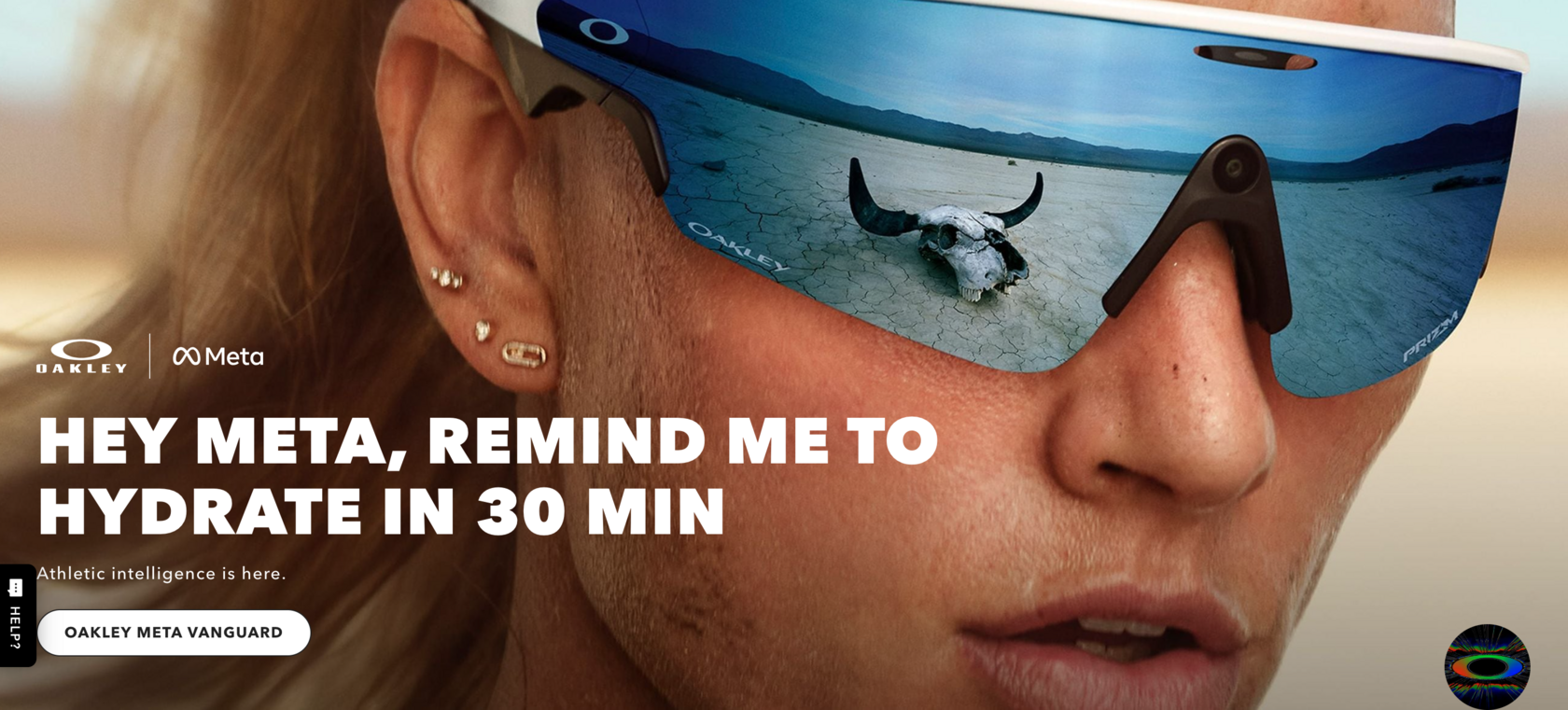
EssilorLuxottica SA delivered an 18% increase in fourth-quarter revenue at constant exchange rates, reaching €7.6 billion ($9 billion), outperforming analyst expectations of over 11% growth. The surge stemmed primarily from strong consumer demand for AI-integrated smart glasses developed in partnership with Meta Platforms Inc.
The company reported sales of more than 7 million pairs of AI-powered glasses across 2025, including Ray-Ban Meta and Oakley models. This volume reflects accelerated adoption in the wearable tech segment, where the Ray-Ban Meta line has driven significant momentum since its expansion.
For the full year 2025, revenue grew 7.5% to €28.49 billion (11.2% at constant exchange rates). Adjusted operating income increased 6.8% to €4.5 billion, though the adjusted margin declined 70 basis points to 16% due to U.S. tariffs and costs associated with scaling smart glasses production. The margin pressure intensified in the second half, but management stated that AI glasses will not cause permanent erosion.
CEO Francesco Milleri and Deputy CEO Paul Du Saillant affirmed commitment to solid revenue expansion over the next five years, with adjusted operating profit growth aligned at a similar pace. Production ramp-up for smart glasses has raised short-term concerns, contributing to a roughly 22% share price drop from November highs, but the company views this as transitional.
Retail Investment Angle The partnership positions EssilorLuxottica as a key player in accessible smart fashion for retail consumers. Ray-Ban Meta glasses combine familiar styling with AI features like real-time assistance, photo/video capture, and audio, appealing to mainstream buyers through channels such as LensCrafters, Sunglass Hut, and direct-to-consumer platforms. North America saw 24% Q4 growth, while Europe and Asia each exceeded 10% on constant-currency basis.
This category bridges traditional eyewear retail with emerging tech wearables. Sales acceleration—from 2 million units cumulative by early 2025 to over 7 million for the full year—demonstrates retail traction beyond niche markets. Meta has delayed international rollout of newer $799 display models due to supply constraints and is exploring capacity expansion to 20 million+ units annually, signaling sustained demand.
Future of Smart Fashion Smart glasses represent the next evolution in consumer-facing wearable tech, integrating fashion, functionality, and AI in everyday accessories. EssilorLuxottica leverages its manufacturing scale, brand portfolio, and retail network to capture this shift. Management envisions smart glasses as a potential smartphone successor, enabling interconnected communities and new use cases in daily life.
For retail investors, the model offers exposure to high-growth wearable AI without pure-play tech volatility. The partnership has already contributed meaningfully to revenue (e.g., over 4 percentage points of Q3 growth from wearables), with long-term forecasts suggesting multi-billion euro potential by 2030 under optimistic scenarios. Execution risks remain around margins and supply scaling, but the trajectory supports informed positioning in smart fashion's retail expansion.
The company reported sales of more than 7 million pairs of AI-powered glasses across 2025, including Ray-Ban Meta and Oakley models. This volume reflects accelerated adoption in the wearable tech segment, where the Ray-Ban Meta line has driven significant momentum since its expansion.
For the full year 2025, revenue grew 7.5% to €28.49 billion (11.2% at constant exchange rates). Adjusted operating income increased 6.8% to €4.5 billion, though the adjusted margin declined 70 basis points to 16% due to U.S. tariffs and costs associated with scaling smart glasses production. The margin pressure intensified in the second half, but management stated that AI glasses will not cause permanent erosion.
CEO Francesco Milleri and Deputy CEO Paul Du Saillant affirmed commitment to solid revenue expansion over the next five years, with adjusted operating profit growth aligned at a similar pace. Production ramp-up for smart glasses has raised short-term concerns, contributing to a roughly 22% share price drop from November highs, but the company views this as transitional.
Retail Investment Angle The partnership positions EssilorLuxottica as a key player in accessible smart fashion for retail consumers. Ray-Ban Meta glasses combine familiar styling with AI features like real-time assistance, photo/video capture, and audio, appealing to mainstream buyers through channels such as LensCrafters, Sunglass Hut, and direct-to-consumer platforms. North America saw 24% Q4 growth, while Europe and Asia each exceeded 10% on constant-currency basis.
This category bridges traditional eyewear retail with emerging tech wearables. Sales acceleration—from 2 million units cumulative by early 2025 to over 7 million for the full year—demonstrates retail traction beyond niche markets. Meta has delayed international rollout of newer $799 display models due to supply constraints and is exploring capacity expansion to 20 million+ units annually, signaling sustained demand.
Future of Smart Fashion Smart glasses represent the next evolution in consumer-facing wearable tech, integrating fashion, functionality, and AI in everyday accessories. EssilorLuxottica leverages its manufacturing scale, brand portfolio, and retail network to capture this shift. Management envisions smart glasses as a potential smartphone successor, enabling interconnected communities and new use cases in daily life.
For retail investors, the model offers exposure to high-growth wearable AI without pure-play tech volatility. The partnership has already contributed meaningfully to revenue (e.g., over 4 percentage points of Q3 growth from wearables), with long-term forecasts suggesting multi-billion euro potential by 2030 under optimistic scenarios. Execution risks remain around margins and supply scaling, but the trajectory supports informed positioning in smart fashion's retail expansion.