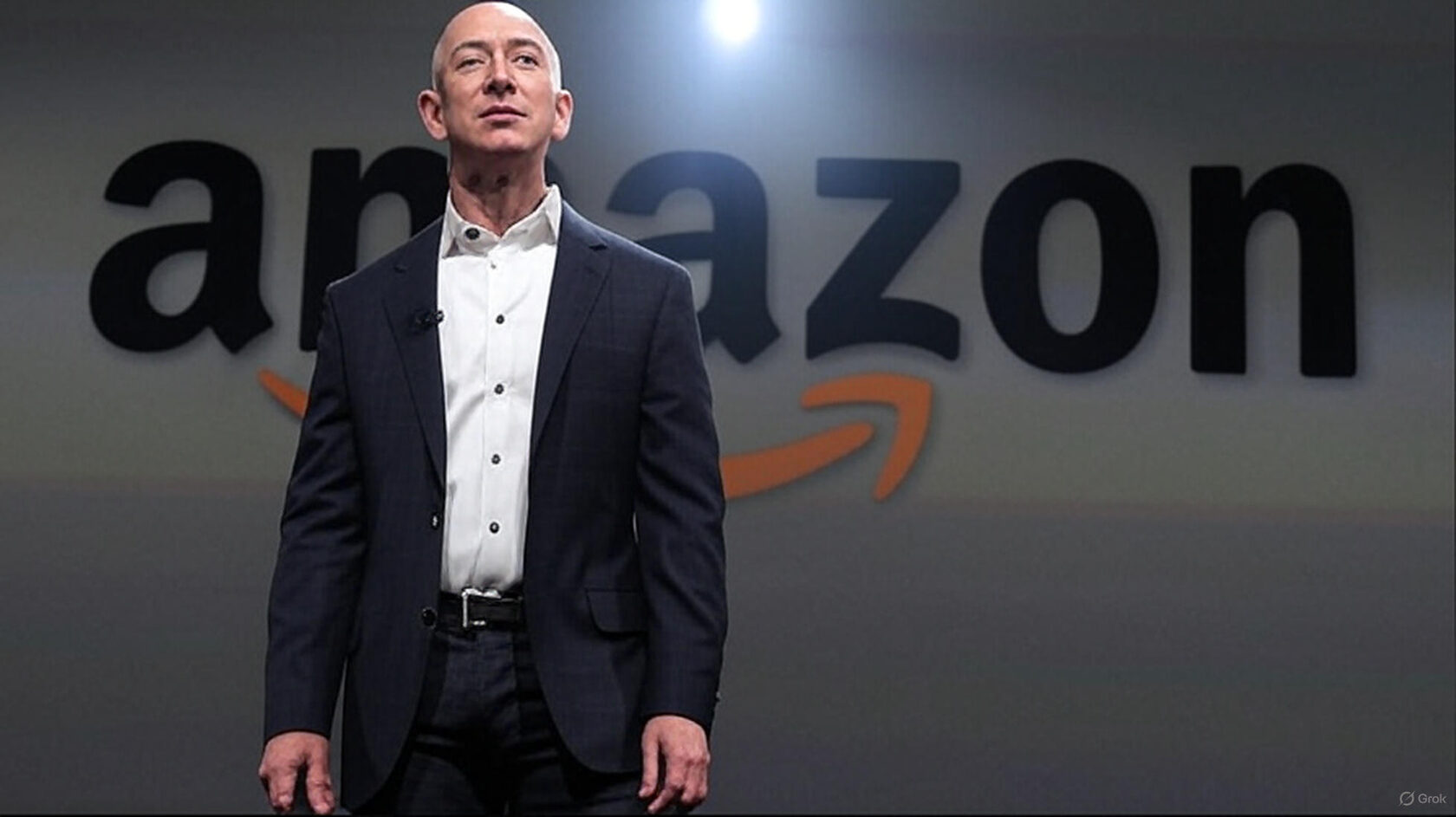
The U.S. Federal Trade Commission has finalized a $2.5 billion settlement with Amazon.com, Inc., resolving claims that the e-commerce giant used misleading tactics to enroll consumers in Prime subscriptions and created barriers to cancellation. This agreement imposes a $1 billion civil penalty on Amazon, mandates $1.5 billion in consumer refunds, and requires operational changes to its subscription processes. For investors, the payout represents a material hit to Amazon's cash reserves, though it closes a multi-year regulatory overhang that had weighed on the stock.
Amazon's Prime membership program, launched in 2005, has grown into a cornerstone of the company's revenue model, boasting over 200 million subscribers worldwide as of mid-2025. Annual dues—$139 in the U.S. for the standard plan—generate roughly $40 billion in recurring revenue, accounting for about 10% of Amazon's total sales but driving higher customer lifetime value through increased spending on e-commerce, streaming, and cloud services. The FTC's allegations center on two core issues: deceptive enrollment interfaces that tricked users into subscriptions during checkout, and a cancellation process designed to retain revenue at the expense of user intent.
The case originated from a 2023 FTC complaint, which accused Amazon of violating the Federal Trade Commission Act and the Restore Online Shoppers’ Confidence Act (ROSCA). Internal documents, uncovered during discovery, revealed executives acknowledging the practices' ethical gray areas. One memo described "subscription driving" as operating in "a bit of a shady world," while another likened leading users to unwanted enrollments as "an unspoken cancer." These admissions underscored a deliberate strategy to boost Prime penetration, which hovers around 70% of U.S. Amazon shoppers, by minimizing friction in sign-ups and maximizing it in exits.
Under the settlement, Amazon must overhaul its Prime flows to prioritize transparency and ease of use. Key mandates include adding a prominent "decline" button—replacing vague options like "No, I don’t want Free Shipping"—and displaying all material terms upfront, such as pricing, auto-renewal dates, and billing frequency. Cancellation will now mirror the enrollment method, whether via app, website, or voice assistant, without added steps that could deter users. An independent third-party overseer will monitor the $1.5 billion redress distribution, targeting refunds for an estimated 35 million affected U.S. consumers who faced unwanted charges or delayed exits.
This redress figure marks the second-largest restitution in FTC history, dwarfed only by the $5 billion Facebook privacy settlement in 2019. The $1 billion penalty is the largest ever for an FTC rule violation, surpassing prior ROSCA cases like a $100 million fine against Uber in 2017. Collectively, the $2.5 billion outlay equates to about 1.5% of Amazon's $170 billion in trailing 12-month free cash flow, a digestible but notable expense amid ongoing investments in AI infrastructure and logistics expansion.
For shareholders, the immediate impact is a one-time charge that could pressure Q4 2025 earnings, potentially trimming adjusted EPS by 5-7 cents per share based on current analyst models. Amazon's stock, trading at a forward P/E of 35 as of September 27, 2025, has risen 25% year-to-date, buoyed by AWS growth and e-commerce rebound. However, this resolution removes a key uncertainty: the original suit sought up to $5 billion in penalties, and a trial loss could have escalated to injunctive relief disrupting Prime's core mechanics. With the case settled pre-trial, Amazon avoids prolonged litigation costs—estimated at $200-300 million—and regains focus on margin expansion, where Prime's 50%+ gross margins remain a high-margin engine.
Broader market implications extend to subscription economy peers. Companies like Netflix, Spotify, and Adobe, which rely on similar auto-renewal models, face heightened scrutiny under ROSCA and state-level laws like California's Automatic Renewal Law. The FTC's win reinforces a trend toward "one-click" cancellations, as seen in the European Union's Digital Services Act, which mandates easy exits for digital services. Investors in these sectors should monitor compliance costs: for Amazon, the changes could reduce Prime churn from its current 3-4% quarterly rate, but at the risk of slower net adds if enrollment friction eases too much.
Consumer behavior data supports the FTC's claims. A 2024 Consumer Reports survey found 40% of U.S. adults struggled with subscription cancellations, with Amazon Prime cited in 25% of cases. Unwanted enrollments often occur during impulse buys, where bundled offers obscure opt-in requirements. Post-settlement, affected users will receive automatic refunds via original payment methods or checks, processed within 90 days. Eligibility covers charges from 2019 onward, prorated for partial months, providing an average $40-50 payout per claimant.
Amazon's response has been measured. In a September 26 statement, the company affirmed its commitment to Prime's value proposition—free two-day shipping, video streaming, and exclusive deals—while pledging swift implementation of the reforms. Internal restructuring may follow: the settlement names Senior VP Neil Lindsay and VP Jamil Ghani, who oversaw Prime operations, though no personal penalties were imposed. This could signal board-level reviews of executive accountability in consumer-facing units.
From an investment lens, Amazon's resilience shines through. Despite regulatory headwinds—including ongoing EU probes into marketplace practices and U.S. antitrust scrutiny—the company's diversified revenue streams mitigate single-event risks. AWS, contributing 17% of sales but 60% of operating income, continues to post 19% year-over-year growth, fueled by enterprise AI demand. E-commerce, at 40% of revenue, benefits from Prime's loyalty lock-in, which the reforms aim to preserve without deception.
Looking ahead, this settlement could catalyze industry-wide standardization. The FTC, under Chairman Andrew N. Ferguson, has signaled aggressive enforcement against "dark patterns"—UI tricks that exploit cognitive biases. Ferguson highlighted the decision's scope in a post-announcement briefing.
💬 “Today, the Trump-Vance FTC made history and secured a record-breaking, monumental win for the millions of Americans who are tired of deceptive subscriptions that feel impossible to cancel. The evidence showed that Amazon used sophisticated subscription traps designed to manipulate consumers into enrolling in Prime, and then made it exceedingly hard for consumers to end their subscription. Today, we are putting billions of dollars back into Americans’ pockets, and making sure Amazon never does this again. The Trump-Vance FTC is committed to fighting back when companies try to cheat ordinary Americans out of their hard-earned pay.” 💬
For portfolio managers, the key takeaway is risk allocation: overweight Amazon for growth exposure, but hedge with diversified consumer staples or value plays less vulnerable to litigation. The settlement's $2.5 billion price tag, while headline-grabbing, underscores Amazon's scale—equivalent to three months of Prime dues revenue. Long-term, cleaner practices may enhance brand trust, potentially lifting customer acquisition costs over time.
In sum, this FTC victory delivers tangible recourse for consumers while imposing guardrails on a subscription behemoth. Investors should view it as a resolved chapter, not a pivot point, in Amazon's trajectory toward $700 billion in annual revenue by 2027. Monitoring quarterly subscriber metrics post-reform will gauge any velocity shifts, but the program's economic moat endures.
You earn satoshi (sats - units of bitcoin) when you read this article on SMART TIMES Telegram mini
Amazon's Prime membership program, launched in 2005, has grown into a cornerstone of the company's revenue model, boasting over 200 million subscribers worldwide as of mid-2025. Annual dues—$139 in the U.S. for the standard plan—generate roughly $40 billion in recurring revenue, accounting for about 10% of Amazon's total sales but driving higher customer lifetime value through increased spending on e-commerce, streaming, and cloud services. The FTC's allegations center on two core issues: deceptive enrollment interfaces that tricked users into subscriptions during checkout, and a cancellation process designed to retain revenue at the expense of user intent.
The case originated from a 2023 FTC complaint, which accused Amazon of violating the Federal Trade Commission Act and the Restore Online Shoppers’ Confidence Act (ROSCA). Internal documents, uncovered during discovery, revealed executives acknowledging the practices' ethical gray areas. One memo described "subscription driving" as operating in "a bit of a shady world," while another likened leading users to unwanted enrollments as "an unspoken cancer." These admissions underscored a deliberate strategy to boost Prime penetration, which hovers around 70% of U.S. Amazon shoppers, by minimizing friction in sign-ups and maximizing it in exits.
Under the settlement, Amazon must overhaul its Prime flows to prioritize transparency and ease of use. Key mandates include adding a prominent "decline" button—replacing vague options like "No, I don’t want Free Shipping"—and displaying all material terms upfront, such as pricing, auto-renewal dates, and billing frequency. Cancellation will now mirror the enrollment method, whether via app, website, or voice assistant, without added steps that could deter users. An independent third-party overseer will monitor the $1.5 billion redress distribution, targeting refunds for an estimated 35 million affected U.S. consumers who faced unwanted charges or delayed exits.
This redress figure marks the second-largest restitution in FTC history, dwarfed only by the $5 billion Facebook privacy settlement in 2019. The $1 billion penalty is the largest ever for an FTC rule violation, surpassing prior ROSCA cases like a $100 million fine against Uber in 2017. Collectively, the $2.5 billion outlay equates to about 1.5% of Amazon's $170 billion in trailing 12-month free cash flow, a digestible but notable expense amid ongoing investments in AI infrastructure and logistics expansion.
For shareholders, the immediate impact is a one-time charge that could pressure Q4 2025 earnings, potentially trimming adjusted EPS by 5-7 cents per share based on current analyst models. Amazon's stock, trading at a forward P/E of 35 as of September 27, 2025, has risen 25% year-to-date, buoyed by AWS growth and e-commerce rebound. However, this resolution removes a key uncertainty: the original suit sought up to $5 billion in penalties, and a trial loss could have escalated to injunctive relief disrupting Prime's core mechanics. With the case settled pre-trial, Amazon avoids prolonged litigation costs—estimated at $200-300 million—and regains focus on margin expansion, where Prime's 50%+ gross margins remain a high-margin engine.
Broader market implications extend to subscription economy peers. Companies like Netflix, Spotify, and Adobe, which rely on similar auto-renewal models, face heightened scrutiny under ROSCA and state-level laws like California's Automatic Renewal Law. The FTC's win reinforces a trend toward "one-click" cancellations, as seen in the European Union's Digital Services Act, which mandates easy exits for digital services. Investors in these sectors should monitor compliance costs: for Amazon, the changes could reduce Prime churn from its current 3-4% quarterly rate, but at the risk of slower net adds if enrollment friction eases too much.
Consumer behavior data supports the FTC's claims. A 2024 Consumer Reports survey found 40% of U.S. adults struggled with subscription cancellations, with Amazon Prime cited in 25% of cases. Unwanted enrollments often occur during impulse buys, where bundled offers obscure opt-in requirements. Post-settlement, affected users will receive automatic refunds via original payment methods or checks, processed within 90 days. Eligibility covers charges from 2019 onward, prorated for partial months, providing an average $40-50 payout per claimant.
Amazon's response has been measured. In a September 26 statement, the company affirmed its commitment to Prime's value proposition—free two-day shipping, video streaming, and exclusive deals—while pledging swift implementation of the reforms. Internal restructuring may follow: the settlement names Senior VP Neil Lindsay and VP Jamil Ghani, who oversaw Prime operations, though no personal penalties were imposed. This could signal board-level reviews of executive accountability in consumer-facing units.
From an investment lens, Amazon's resilience shines through. Despite regulatory headwinds—including ongoing EU probes into marketplace practices and U.S. antitrust scrutiny—the company's diversified revenue streams mitigate single-event risks. AWS, contributing 17% of sales but 60% of operating income, continues to post 19% year-over-year growth, fueled by enterprise AI demand. E-commerce, at 40% of revenue, benefits from Prime's loyalty lock-in, which the reforms aim to preserve without deception.
Looking ahead, this settlement could catalyze industry-wide standardization. The FTC, under Chairman Andrew N. Ferguson, has signaled aggressive enforcement against "dark patterns"—UI tricks that exploit cognitive biases. Ferguson highlighted the decision's scope in a post-announcement briefing.
💬 “Today, the Trump-Vance FTC made history and secured a record-breaking, monumental win for the millions of Americans who are tired of deceptive subscriptions that feel impossible to cancel. The evidence showed that Amazon used sophisticated subscription traps designed to manipulate consumers into enrolling in Prime, and then made it exceedingly hard for consumers to end their subscription. Today, we are putting billions of dollars back into Americans’ pockets, and making sure Amazon never does this again. The Trump-Vance FTC is committed to fighting back when companies try to cheat ordinary Americans out of their hard-earned pay.” 💬
For portfolio managers, the key takeaway is risk allocation: overweight Amazon for growth exposure, but hedge with diversified consumer staples or value plays less vulnerable to litigation. The settlement's $2.5 billion price tag, while headline-grabbing, underscores Amazon's scale—equivalent to three months of Prime dues revenue. Long-term, cleaner practices may enhance brand trust, potentially lifting customer acquisition costs over time.
In sum, this FTC victory delivers tangible recourse for consumers while imposing guardrails on a subscription behemoth. Investors should view it as a resolved chapter, not a pivot point, in Amazon's trajectory toward $700 billion in annual revenue by 2027. Monitoring quarterly subscriber metrics post-reform will gauge any velocity shifts, but the program's economic moat endures.
You earn satoshi (sats - units of bitcoin) when you read this article on SMART TIMES Telegram mini